How to re-engage employees when engagement is a business goal
Many HR teams set employee engagement as a goal, but progress can stall without practical changes. This guide explains how to re-engage employees by improving clarity, relevance and ease of action.
Jenny Hinde, Chief People Officer at Personal GroupTuesday 17 February 2026
Share on socials:

Employee engagement is a common HR priority and an ongoing business challenge. For many organisations, it is also a commitment to creating a better experience for their people.
Setting engagement goals and defining KPIs is an important step. The harder part is turning that focus into measurable progress that employees can actually feel in their day-to-day work.
Re-engaging employees does not start with a new initiative. It starts with understanding where engagement is lacking, why it feels harder for some teams than others and what practical barriers may be limiting participation.
This article outlines a practical framework to help HR teams re-engage employees in a way that supports both organisational goals and employee experience.

Why engagement stalls even when it is prioritised
Many engagement plans are built with good intent. But employees do not experience intent. They experience systems, communication and everyday interactions.
If access to support is unclear, messages feel disconnected or taking action requires too much effort, engagement can stall even when it is clearly positioned as a priority.
Common barriers include:
- Engagement initiatives that explain rather than enable
- Benefits or support that are difficult to find
- Inconsistent messaging across teams
- Limited understanding of where engagement is weakest
When experience does not change, behaviour rarely does either.
Where engagement gaps often appear
Engagement is not evenly distributed across an organisation.
Some teams may feel well supported, while others struggle with workload, communication or visibility of benefits. Frontline colleagues may have a different experience to office-based teams. New joiners may not understand what is available to them.
Re-engaging employees begins with understanding:
- Which teams or roles show lower interaction or participation
- What feedback suggests about clarity or relevance
- Whether employees know where to go when they need support
Without this insight, engagement efforts risk being broad but not targeted.
A practical framework to re-engage employees
Re-engagement is most effective when friction is reduced and relevance is increased. Small, practical changes often have more impact than large-scale campaigns.
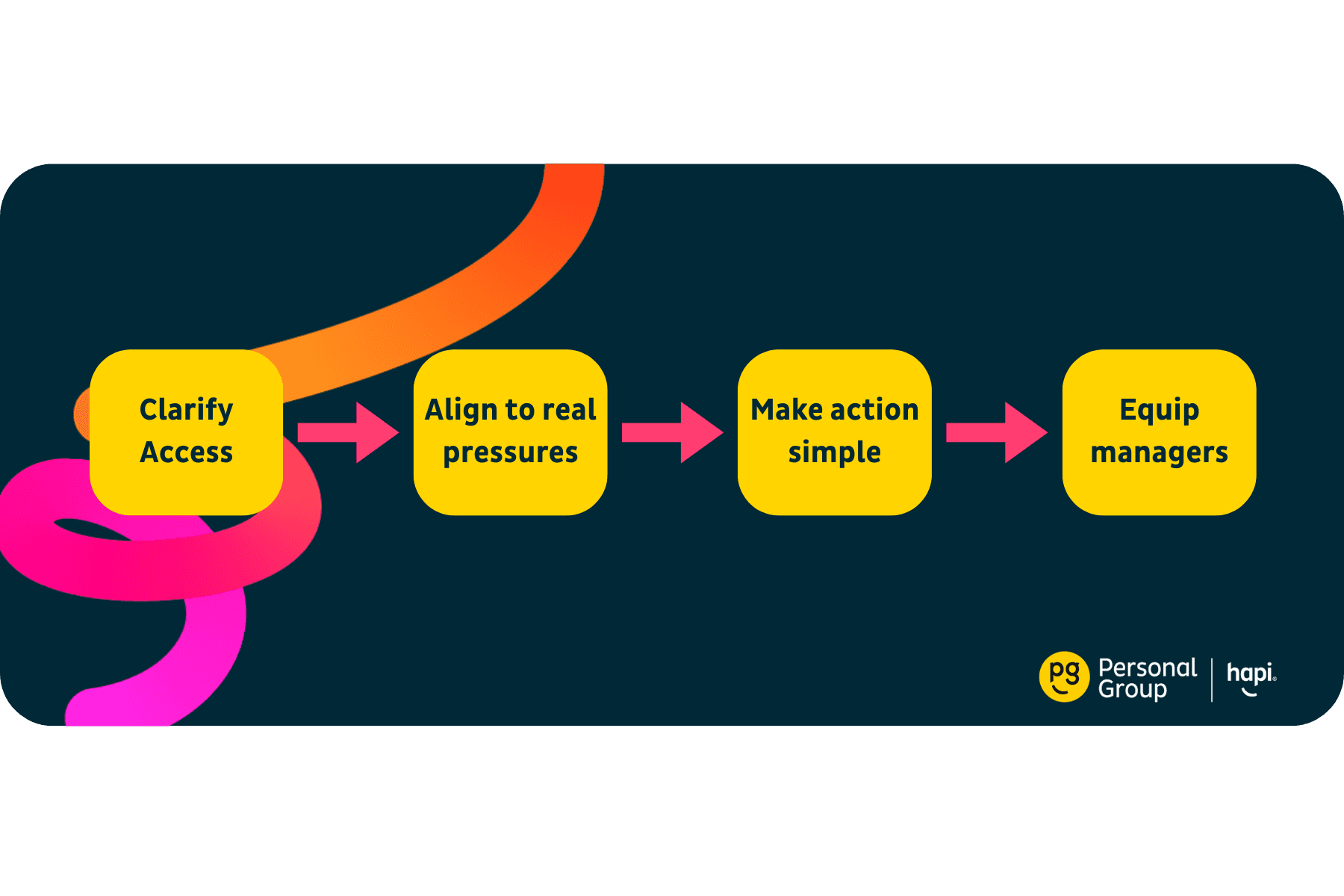
Clarify access and simplify the journey
Employees should know exactly where to go for engagement activity, benefits and support. Multiple entry points and inconsistent signposting create uncertainty.
Confidence in access is a foundation for participation.
Align engagement to what matters to your people
Engagement improves when support reflects real pressures and priorities.
This may include workload demands, financial concerns, wellbeing or career progression. When engagement activity feels relevant, employees are more likely to see value in participating.
Make taking action straightforward
If engagement requires too many steps, too much explanation or too much interpretation, it becomes optional.
Clear, simple actions encourage participation and build momentum.
Equip managers to reinforce engagement consistently
Managers are a key link between strategy and employee experience.
Providing short, usable prompts and clear signposting helps ensure engagement feels consistent across teams, not dependent on individual leadership style.
How to measure whether re-engagement is working
Re-engagement should be visible in behaviour and experience, not just survey results.
Useful measures include:
- Interaction with engagement platforms or benefits
- Uptake of priority resources
- Reduction in repeated questions
- Feedback from teams where engagement was previously lower
Regularly reviewing where engagement remains weaker allows HR teams to adjust rather than assume progress.
Where Hapi fits
Hapi supports organisations by simplifying access to benefits and engagement and providing insight into where engagement is strong and where it may be lacking.
This helps HR teams make informed adjustments and focus on what matters most for their people.

Turning engagement focus into meaningful impact
Engagement goals signal intent. Re-engaging employees requires understanding gaps, reducing friction and aligning support to real employee needs.
By focusing on clarity, relevance and consistency, HR teams can build engagement in a way that supports performance and improves everyday experience for their people.
Read more and access the Employee Re-Engagement Checklist to sense-check whether your engagement approach is set up to deliver meaningful impact.