Five signs your employee benefits aren't reaching the people who need them
Jenny Hinde, Chief People Officer, Personal GroupWednesday 18 November 2026
Share on socials:
Having a comprehensive employee benefits package doesn't necessarily mean employees are getting the support they need.
For frontline, deskless and lower-paid workers, the gap between having benefits available and being able to use them can be significant. Shift patterns, financial pressures, complicated processes and communication barriers can all prevent employees from accessing support that's already there.
And it's a bigger issue than employers might realise.
Research from Simplyhealth, referenced in our latest report with the Reward & Employee Benefits Association (REBA), found that 53% of employees who use or attempt to use health benefits encounter some form of friction.
For HR and Reward leaders, improving employee benefits engagement starts with understanding where those barriers exist.
Here are five warning signs that your benefits may not be reaching the people who need them.
1. Low employee benefits registrations
Low registration rates can be an early indication that employees aren't connecting with the benefits available to them.
But before assuming there's a lack of interest, it's worth looking at whether people know what's on offer and how to access it.
For an office-based employee, finding information through company emails or an intranet might be straightforward. For someone working rotating shifts, on a production line or out on the road, it's often a very different experience.
If registrations are low, look at where employees are dropping out.
Are invitations reaching everyone? Is enrolment straightforward? Can employees register on their own devices, at a time that works for them?
Sometimes the problem isn't the benefit itself. It's the journey to accessing it.
2. Employees aren't using the benefits available
Registration is only the first step in employee benefits engagement.
Someone might have access to physiotherapy, healthcare support or financial protection but never make use of it.
That doesn't necessarily mean the benefit isn't valuable.
Employees may not understand what's covered, be unsure how to make a claim or struggle to arrange appointments around their working hours.
For lower-paid workers, taking time away from work can also mean losing income or facing additional costs.
In fact, research cited in the REBA report found that one in five employees would use health benefits more if they didn't have to take time off work.
Understanding why employees aren't using their benefits is just as important as knowing how many have signed up.
3. Employee benefits communications aren't improving uptake
You've sent the emails, updated the intranet and promoted the benefits package, but engagement hasn't improved.
The issue may not be how often you're communicating. It could be whether your messages are reaching the right people in a way that works for them.
Many frontline employees don't have regular access to company email addresses or opportunities to check workplace communications during their shifts.
Improving employee benefits communication means recognising that different workforce groups need different approaches.
Mobile notifications, workplace materials, team briefings, line manager conversations and face-to-face engagement can all help make information more accessible.
Language matters too.
Insurance terminology, lengthy explanations and complicated processes can make even valuable benefits feel difficult to understand.
The goal isn't simply to increase awareness. It's to help employees recognise which benefits are relevant to them and feel confident taking the next step.
4. Employees struggle to understand or access their benefits
If employees repeatedly ask how to enrol, what's included or how to make a claim, it's worth paying attention.
These questions may suggest that benefits information is difficult to find, unclear or unnecessarily complicated.
And when people are making decisions about their health or finances, uncertainty can be enough to stop them engaging altogether.
Clear explanations, straightforward enrolment and claims processes, and opportunities to ask questions privately can all help build confidence.
Line managers also have an important role in signposting employees towards support, provided they're equipped with the right information and guidance.
They don't need to become benefits experts. They simply need to know where employees can find reliable answers.
5. Sickness absence and presenteeism remain a concern
High sickness absence or employees regularly working while unwell can be signs of wider workforce health challenges.
While employee benefits alone cannot solve these issues, they may form part of the solution.
If employees are delaying treatment, struggling to access healthcare or continuing to work despite health concerns, employers should consider whether existing support is reaching people early enough.
Looking at absence trends alongside benefits usage and employee feedback can help identify where additional signposting or earlier intervention may be valuable.
It's also important to understand whether certain workforce groups are disproportionately affected.
A benefits strategy that works well for office-based employees may not be delivering the same value to those working shifts or in physically demanding roles.
How to improve employee benefits engagement
When employee benefits uptake is low, the temptation can be to introduce something new.
But adding more benefits won't necessarily solve the reasons employees aren't using what's already available.
A better starting point is understanding where access breaks down.
Are employees aware of their options? Do they understand them? Can they afford them? And can they realistically use them around their working lives?
By looking at benefits through the eyes of employees, organisations can identify practical improvements that make existing support more accessible and valuable.
That could mean simplifying enrolment, communicating through different channels, improving manager signposting or combining digital access with face-to-face conversations.
Ultimately, the success of an employee benefits strategy shouldn't be measured solely by what's available. It should be measured by whether employees can actually benefit from it.
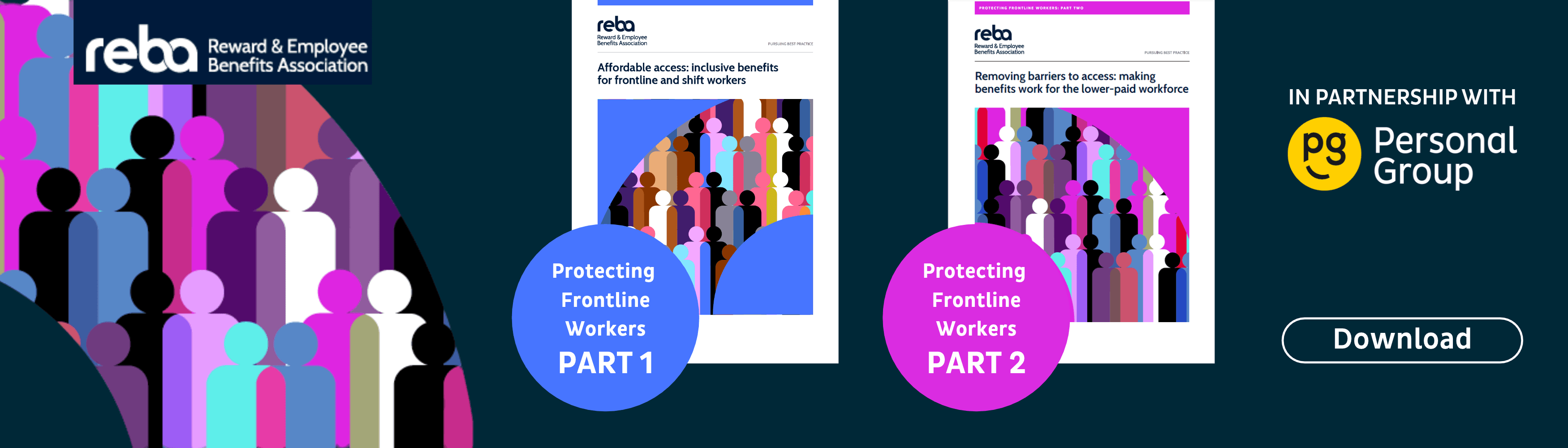
Our second report with REBA, Removing barriers to access: how employers can make cost-effective benefits work for the lower-paid workforce, explores the practical, financial and behavioural barriers affecting benefits uptake, alongside recommendations for employers.